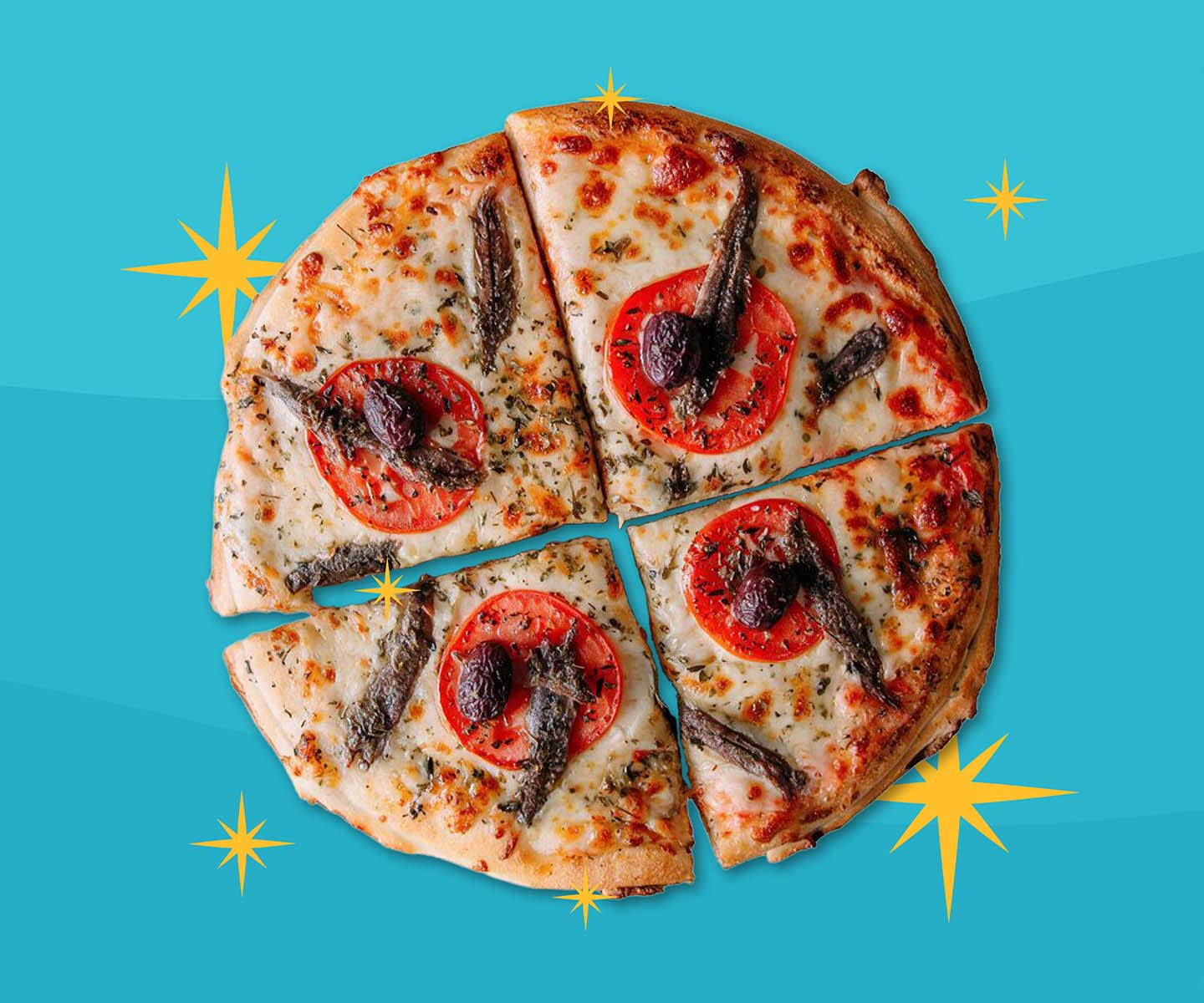
Seafood Meets Pizza
It’s trendy, and it’s traditional. Maybe seafood and pizza really are the one true pairing?
Since the advent of the anchovy, seafood and pizza have had a close but contentious relationship. While seafood can no longer lay claim to the title of most controversial pizza topping (hello pineapple!), there is still a nagging belief that seafood on pizza is weird—or even sacrilegious.
However, the truth is that seafood has always been instrumental in pushing pizza forward. Maybe we’re biased, but here at Chicken of the Sea, we reckon it’s high time to put some respect on seafood pizza’s name.
Seafood plays an important part in the history of pizza.
Who even thought of putting seafood on pizza in the first place? How about the Neapolitans? You know, the inventors of pizza?
Located on the ankle of Italy’s “boot”, Naples is a coastal city with a robust seafood culture. According to Slate’s Explainer: Why Is Anchovies Still A Pizza Topping?, the first pizzaioli there used locally caught anchovies to add flavor to their pizza. The briny fish made for a plentiful source of protein and was a welcome flavor complement to the tomato.
When Italian immigrants brought pizza to North America, anchovies came along for the ride. Their popularity as a topping was soon eclipsed as sausage and other meats became the go-to protein, but the humble anchovy still has its place in history as one of the first pizza toppings.
What kinds of seafood do people put on pizza today?
What started with anchovies continues to this day. Chefs will always be inspired by the flavors of the sea. Combine that with pizza’s worldwide appeal and you can bet that somebody, somewhere is going to get experimental with their next slice.
Smoked Salmon Pizza
Over the years, seafood on pizza has gotten the nod from some of the biggest names in international cuisine. When Wolfgang Puck was opening his ultra-glamorous Hollywood restaurant Spago, he made sure to bring in a pizza chef—something previously unheard of in fine dining.
That stroke of hiring genius paid off soon enough. Spago’s Smoked Salmon Pizza was born one night when the kitchen ran out of brioche to top with their smoked salmon. Smoked salmon pizza spawned a host of imitators, with “Spago pizza” soon popping up on menus at restaurants around the world.
This pizza substitutes dill-infused crême fraiche for traditional tomato sauce. The restaurant’s current smoked salmon pie is also topped with caviar, so technically it has double the seafood toppings.
Wolfgang Puck’s original pizza chef, Ed LaDou, was a pizza visionary in his own right who went on to create the menu for the original California Pizza Kitchen, establishing the Golden State’s reputation for topping innovation from day one (Wikipedia).
Channel your own inner Wolfgang Puck. Check out our foodservice-friendly recipe for Fresh Tomato and Salmon Pizza.
New Haven White Clam Pie
Since the 1920s, one of seafood pizza’s most stalwart champions has been Frank Pepe Pizzeria Napoletana in New Haven, Connecticut. Its founder, Italian immigrant Frank Pepe, was one of the first to adapt traditional Neapolitan pizza-making to create a distinctive pie that the locals call apizza (Wikipedia).
Pepe also experimented with adding littleneck clams to his pizzas. The White Clam Pie was created from these experiments, combining freshly shucked clams with chopped garlic, olive oil and grated cheese. Mozzarella counts as an “extra” topping and is not recommended, as it makes the pizza too heavy.
In the 2000s, food bloggers “rediscovered” Frank Pepe’s, and even pizza purists had to agree that the White Clam Pie was both legit—and legitimately delicious.
Grab our recipe for Tuscan Tuna Melt Flatbread Pizza and put seafood pizza on your foodservice menu.
Pizza de Atum
One of the reasons pizza has found a home in so many different places around the globe is that you can throw on whatever ingredients you have close at hand and still come up with a pretty tasty pie.
In Brazil, the local pizza culture stands out with a unique version they call Pizza de Atum. Before it goes into the oven, the pizza is topped with tomato sauce, onion and raw grated tuna (that’s the atum in Pizza de Atum). Some versions of Pizza de Atum use canned tuna instead. This seafood pizza has found fans in Europe and Japan as well.
The Asian pizza scene is another hotbed of seafood pizza creativity. In places like India, Malaysia and Vietnam, even chains like Domino’s and Pizza Hut offer seafood styles that highlight locally caught tastes (Wikipedia).
Serve up some seafood flavor with your pizza offerings. Try our recipe for Tuna Veggie Pizza. Get it and all our latest foodservice creations on our recipe site.